

Steering Wheel Locked & Car Won’t Start – Causes & Solutions
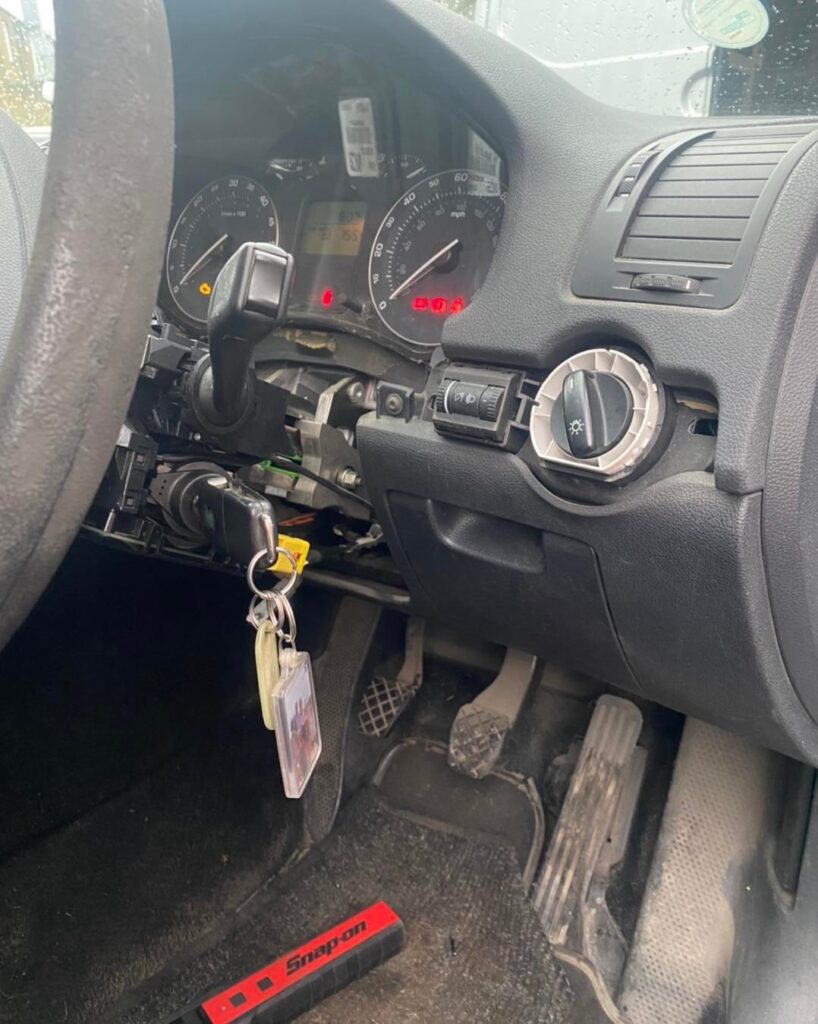
MR IGNITION • STEERING LOCK & IGNITION SPECIALIST Steering Wheel Locked & Car Won’t Start – Common Causes & Solutions Is your steering wheel locked and your car refusing to start? The problem could be something as simple as pressure on a mechanical steering lock, or it could indicate a worn ignition barrel, failed mechanical steering lock, electronic steering lock fault, ESL/ELV failure, electronic ignition problem or another issue. Understanding the symptoms can help identify the correct repair. Few situations are more frustrating than getting into your vehicle, attempting to start it and discovering that the steering wheel is locked and the car will not start. You may find that the key will not turn. The steering wheel may feel completely jammed. On an electronic ignition system, the vehicle may fail to recognise the key or the electronic steering lock may not release. Although these symptoms can appear similar, they do not always have the same cause. Some steering lock problems are caused by normal pressure being applied to a mechanical steering lock after parking. Others are caused by genuine component failure, including a worn ignition barrel, damaged steering lock mechanism or failed electronic steering lock. Mr Ignition specialises in diagnosing and repairing suitable ignition barrel, steering lock, electronic steering lock, ESL and ELV faults across a range of cars and vans. Quick Answer: Why Is My Steering Wheel Locked and My Car Won’t Start? If your steering wheel is locked and the car will not start, the first thing to establish is whether you have a normal steering lock under tension or an actual ignition or steering lock failure. On vehicles with a traditional key and mechanical steering lock, pressure from the steering wheel can sometimes make the ignition key difficult to turn. Gently relieving the steering pressure while turning the key may allow the lock to release. If the key remains jammed, will not turn, the steering lock does not release or an electronic steering lock fails to unlock, there may be a genuine fault requiring diagnosis and repair. Possible causes include a worn ignition key, failed ignition barrel, mechanical steering lock failure, electronic steering lock failure, ESL/ELV fault, electronic ignition problem or low vehicle voltage. Steering Wheel Locked and Vehicle Won’t Start? If your steering lock will not release or your ignition key will not turn, contact Mr Ignition with your vehicle registration, make, model, year and exact postcode. Tell us whether the vehicle uses a traditional key, electronic key or push-button start, and describe exactly what happens when you attempt to start the vehicle. Mobile assistance may be available for suitable ignition barrel and steering lock faults subject to current coverage, location, parts and availability. We are available 24/7 for enquiries. Call Now WhatsApp Us Common Reasons Your Steering Wheel Is Locked and the Car Won’t Start The correct diagnosis depends heavily on the symptoms. Here are some of the most common areas to consider. Steering Lock Under Tension The steering wheel may have moved against the lock after the vehicle was parked, placing pressure on the mechanical steering lock and making the ignition key difficult to turn. Worn Ignition Barrel Internal wear inside a mechanical ignition barrel can cause the key to become stiff, jam or stop turning completely. Mechanical Steering Lock Failure A worn, damaged or jammed steering lock mechanism can prevent the steering from unlocking correctly even when the correct key is used. Electronic Steering Lock Failure Vehicles equipped with an electronic steering lock may refuse to enable the ignition or start if the lock cannot complete its expected unlock sequence. ESL or ELV Failure An Electronic Steering Lock, often referred to as an ESL or ELV depending on the manufacturer, can fail mechanically or electronically and leave the vehicle immobilised. Ignition or Key Recognition Fault On electronic ignition systems, a fault involving the key, ignition control system or associated modules can sometimes produce symptoms similar to steering lock failure. 1. Steering Lock Under Tension After Parking Not every locked steering wheel indicates a broken steering lock. On vehicles with a traditional mechanical steering lock, the steering can sometimes move slightly after the ignition key has been removed. If the front wheels are turned or the vehicle is parked against a kerb, pressure can be applied to the steering system. The steering wheel may then press firmly against the locking mechanism. When you return to the vehicle, the key may feel difficult to turn because the steering lock is under load. In this situation, gently moving the steering wheel in the direction where there is some available movement while carefully turning the ignition key may relieve the pressure. Do not use excessive force on the key. If the key remains completely jammed or this problem occurs repeatedly, there may be wear within the key, ignition barrel or steering lock mechanism. Do Not Force the Ignition Key If the key will not turn, avoid applying excessive force. A worn ignition key can bend or snap. Excessive force can also damage the internal components of the ignition barrel or steering lock. A relatively straightforward ignition barrel or steering lock fault can become a more complicated repair if the key breaks inside the barrel. If gentle steering pressure does not release the lock, the fault should be investigated rather than forcing the key. 2. Worn or Failed Ignition Barrel The ignition barrel is the mechanical lock cylinder into which the vehicle key is inserted on traditional key-operated ignition systems. Inside the barrel are precision components that must align correctly with the cuts of the key. Over time, both the key and internal barrel components can wear. Possible symptoms of ignition barrel wear include: Key becoming increasingly difficult to turn Key needing to be wiggled before the ignition turns Ignition working intermittently Key becoming stuck in certain positions Key inserting normally but refusing to rotate Steering lock remaining engaged because the barrel cannot turn Ignition suddenly jamming completely If the ignition barrel cannot rotate into the
Vauxhall & Smart Car Key Stuck in Ignition – Ignition Barrel Solenoid Replacement
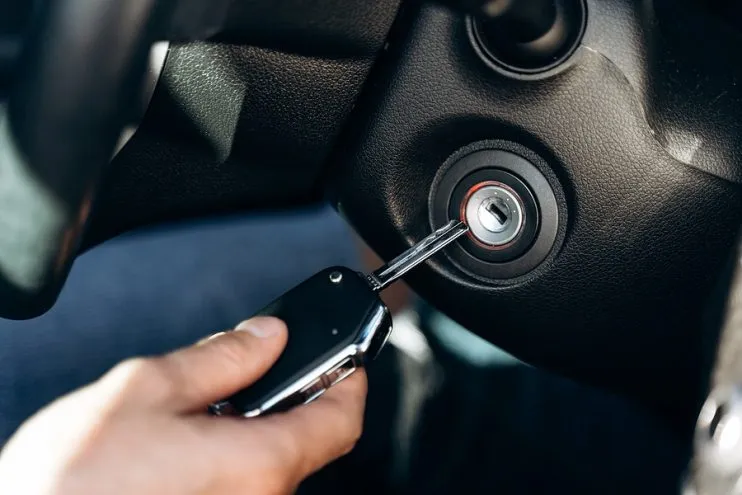
MR IGNITION • IGNITION BARREL & KEY RELEASE SPECIALIST Vauxhall & Smart Car Key Stuck in Ignition – Ignition Barrel Solenoid Replacement Have you switched off your automatic Vauxhall or Smart car only to find that the key will not come out of the ignition? On certain models, a fault with the ignition barrel key-release mechanism, interlock system or associated solenoid can leave the key trapped in the ignition. Mr Ignition offers specialist diagnosis and replacement services for suitable Vauxhall and Smart ignition barrel solenoid and key-release faults. A car key stuck in the ignition can be a frustrating fault, particularly when the vehicle otherwise appears to be working normally. You may be able to start the car, drive it and switch the engine off without any obvious problem. But when you try to remove the key, it remains trapped in the ignition barrel. This type of problem can occur on certain automatic Vauxhall and Smart vehicles where the ignition system incorporates a key-release or interlock function. On suitable systems, a solenoid or associated release mechanism helps control when the key can be removed from the ignition. If this component fails, sticks or no longer operates correctly, the key may remain locked inside the ignition barrel even when the vehicle has been switched off. Mr Ignition specialises in ignition barrel and steering lock faults and offers replacement services for suitable ignition barrel solenoid and key-release mechanism problems on Vauxhall and Smart vehicles. Quick Answer: Why Is My Key Stuck in the Ignition? If you have an automatic Vauxhall or Smart car and the key will not come out of the ignition after switching the vehicle off, one possible cause is a fault with the ignition barrel key-release solenoid or interlock mechanism. On applicable vehicles, the system is designed to control when the ignition key can be released. If the solenoid or associated mechanism fails, the ignition barrel may not release the key correctly. The result can be a vehicle that starts and drives but leaves the key physically trapped in the ignition when you reach your destination. Mr Ignition can diagnose suitable Vauxhall and Smart key-stuck-in-ignition faults and replace the relevant solenoid or associated ignition barrel component where appropriate. Vauxhall or Smart Car Key Stuck in the Ignition? If your automatic Vauxhall or Smart car will not release the ignition key, contact Mr Ignition with your vehicle registration, model, year and exact postcode. Tell us whether the key turns normally, whether the vehicle starts and drives, whether the gearbox is selecting gears correctly and what happens when you attempt to remove the key. Mobile assistance may be available for suitable ignition barrel solenoid and key-release faults, subject to current coverage, location, parts and availability. We are available 24/7 for enquiries. Call Now WhatsApp Us Why Do Automatic Cars Have a Key-Release Interlock? On certain automatic vehicles, the ignition and transmission systems incorporate an interlock designed to control when the ignition key can be removed. The exact design varies between manufacturers and models, but the general principle is that the vehicle must recognise the appropriate conditions before the key is released. Depending on the vehicle, this can involve interaction between the ignition mechanism, transmission selector position, electrical signals and a release solenoid or locking mechanism. When everything operates correctly, the driver stops the vehicle, selects the appropriate transmission position, switches the ignition off and removes the key normally. When part of the release system fails, the key may remain physically locked inside the ignition. What Is an Ignition Barrel Key-Release Solenoid? A solenoid is an electrically operated component that creates mechanical movement when activated. Within certain ignition and key-release systems, a solenoid can form part of the mechanism that controls whether the key is allowed to move fully into the release position and be removed from the ignition. When the correct conditions are met, the system allows the mechanism to release. If the solenoid fails or the associated mechanism becomes faulty, the ignition barrel may continue to retain the key. This is why a customer can sometimes have a vehicle that appears to operate normally in most respects but still cannot remove the key after switching off. Common Symptoms of an Ignition Barrel Solenoid or Key-Release Fault The exact symptoms depend on the vehicle and the nature of the fault, but possible signs include: Key Won’t Come Out The most obvious symptom is a key that remains trapped inside the ignition after the engine has been switched off. Key Won’t Reach Release Position The key may turn towards the off position but appear to stop just before the final position required for removal. Intermittent Key Release The key may release normally on some occasions but remain stuck at other times as the fault develops. Car Starts and Drives Normally In some cases, the vehicle may still start and drive normally even though the key-release function has failed. Problem Appears After Parking The fault may only become obvious when the journey is finished and the driver attempts to remove the key. Key Remains Trapped After Switching Off The engine may be off and the vehicle parked, but the ignition mechanism still refuses to release the key. Vauxhall Key Stuck in Ignition Certain automatic Vauxhall models can experience faults where the ignition key becomes trapped and cannot be removed normally. Although the Astra is one model where owners may encounter this type of symptom, the issue should not be described as an Astra-only problem. Other Vauxhall models and vehicle generations may use ignition and transmission interlock arrangements that can produce similar key-release symptoms when a component fails. A Vauxhall owner may find that the car starts and drives normally, but after parking and switching the engine off, the ignition key refuses to come out. Depending on the exact vehicle and system, the cause may involve the ignition barrel release solenoid, interlock mechanism or another component involved in confirming that the key can safely be released. Because Vauxhall models and ignition systems vary,
Elementor #13804VAG Ignition Switch 7E0905865 – Key Turns but No Crank or StartElementor #13804
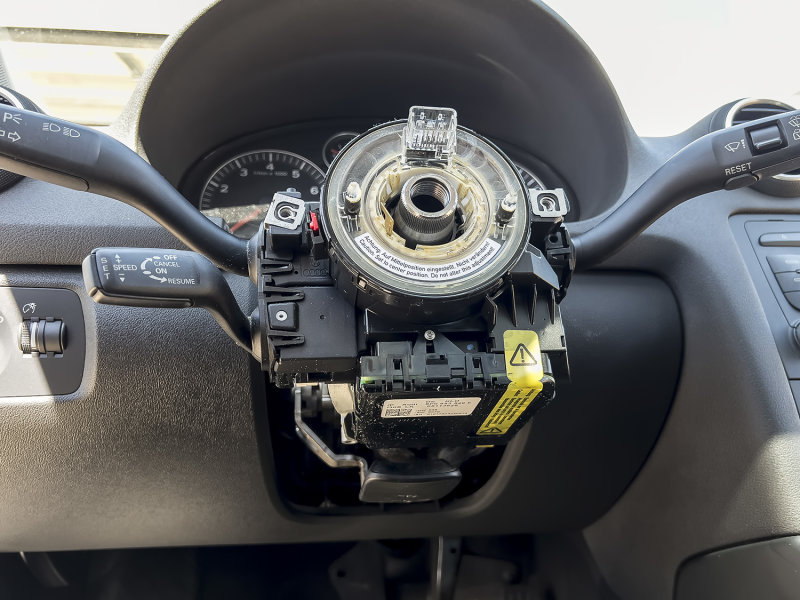
MR IGNITION • VAG IGNITION SPECIALIST VAG 6-Pin Ignition Starter Switch 7E0905865 – Ignition Turns but No Crank or Start You turn the ignition key in your Volkswagen, SEAT or Škoda and expect the engine to crank – but nothing happens. The key may turn normally, the ignition barrel may feel completely fine, yet the starter does not operate. On compatible VAG vehicles, one possible cause is a faulty 6-pin ignition starter switch associated with part number 7E0905865. A vehicle that suddenly refuses to crank can easily lead to the wrong diagnosis. The battery may be blamed. The starter motor may be suspected. Some owners assume the ignition barrel or key has failed. But if the ignition key turns normally and the vehicle fails to crank when the key is turned to the start position, the fault may be within the electrical ignition starter switch rather than the mechanical ignition barrel itself. On a range of Volkswagen Group vehicles, including certain Volkswagen, SEAT and Škoda models, a compatible 6-pin ignition starter switch may be associated with part number 7E0905865. Mr Ignition specialises in diagnosing and resolving suitable ignition barrel, ignition switch and steering lock faults across cars and vans. If your VAG vehicle’s key turns but the engine does not crank, identifying whether the fault is mechanical or electrical is essential before replacing parts. Quick Answer: Key Turns but Your VAG Vehicle Won’t Crank? If the key turns through the ignition positions but there is no crank when you turn the key to the start position, one possible cause on compatible Volkswagen, SEAT and Škoda vehicles is a faulty electrical ignition starter switch. The 6-pin ignition starter switch associated with VAG part number 7E0905865 is listed for use across a number of VAG models, including certain VW Transporter T5 and T6, Amarok, Polo, Up!, California and Caravelle models, as well as selected SEAT Ibiza and Mii and Škoda Fabia, Roomster and Citigo models. However, a no-crank condition can have several other causes. The exact vehicle, part number and fault should always be confirmed before replacement. VAG 6-Pin Ignition Starter Switch 7E0905865 A 6-pin electrical ignition starter switch used on compatible Volkswagen Group applications. Always check the existing component and confirm compatibility with the exact vehicle before ordering or fitting a replacement. Ignition Turns but Your VW, SEAT or Škoda Won’t Crank? Contact Mr Ignition with your vehicle registration, make, model, year, exact postcode and a clear description of what happens when you turn the key. Tell us whether the dashboard illuminates normally, whether the key turns fully to the start position and whether the starter motor makes any sound at all. Mobile assistance may be available for suitable ignition switch and ignition system faults subject to current coverage, location and availability. We are available 24/7 for enquiries. Call Now WhatsApp Us What Is the VAG 7E0905865 Ignition Starter Switch? The ignition starter switch is an electrical component associated with the operation of the vehicle’s ignition system. On traditional key-operated vehicles, turning the key rotates the mechanical ignition barrel. That mechanical movement then operates the electrical ignition switch on applicable systems. The two components perform different jobs. Mechanical Ignition Barrel The ignition barrel is the mechanical lock cylinder operated by the vehicle key. Mechanical wear can cause the key to become stiff, difficult to turn or completely jammed. Electrical Ignition Starter Switch The electrical switch responds to the movement of the ignition mechanism and provides the appropriate electrical switching functions. A switch fault can potentially result in a key that turns normally but does not produce the expected electrical response. This distinction is important because replacing the mechanical ignition barrel will not necessarily repair a fault that is actually within the electrical ignition starter switch. Common Symptoms of a Faulty Ignition Starter Switch The exact symptoms depend on the vehicle and nature of the fault, but possible signs of an ignition switch problem can include: Key turns normally but the engine does not crank No response when the key reaches the start position Intermittent no-crank condition Vehicle starts on some attempts but not others Ignition functions work but the starter is not activated Starting response changes depending on key position Vehicle suddenly fails to crank despite the key turning correctly Electrical ignition behaviour becomes intermittent A particularly important clue is when the mechanical operation of the key and ignition barrel feels completely normal, but the expected electrical response does not occur when the key is turned to start. No Crank Does Not Automatically Mean the Ignition Switch Is Faulty A faulty ignition starter switch is only one possible cause of a no-crank condition. Other possible causes can include a weak or discharged battery, battery connection problems, starter motor or starter solenoid faults, relay or fuse issues, wiring problems, clutch or selector interlock faults, security or immobiliser issues, control module faults or other electrical problems. The correct fault should therefore be identified before replacing the 7E0905865 switch or any other component. Why Does the Ignition Turn but Nothing Happens? When you turn a traditional ignition key, several different things happen in sequence. The mechanical key operates the ignition barrel. The barrel rotates the associated mechanism, which in turn operates the electrical ignition switch on applicable vehicles. If the mechanical part works correctly but the electrical switch does not correctly respond in the start position, the driver may experience a situation where: The key inserts normally The key turns normally The steering lock releases normally The dashboard may illuminate The ignition appears to switch on But the engine does not crank when the key is turned fully This is one of the symptom patterns that may lead to investigation of the electrical ignition starter switch. Which Vehicles Use the 7E0905865 6-Pin Ignition Starter Switch? The 6-pin ignition starter switch associated with part number 7E0905865 is listed for a range of Volkswagen Group applications. The following application information is provided as a fitment guide. Exact compatibility can vary according to vehicle production date,
Airbag Module Crash Data Reset – Complete UK Guide
MR IGNITION • AIRBAG & SRS INFORMATION GUIDE Airbag Module Crash Data Reset – Complete UK Guide After a vehicle has been involved in an accident, the airbag or SRS control module may store crash data that cannot always be cleared using a standard diagnostic tool. This complete guide explains what airbag module crash data is, why it is stored, when an airbag ECU may need resetting and how our specialist sister company, Reset My Airbag, provides a dedicated UK postal crash data reset service. Modern vehicle airbag systems are controlled by an electronic module commonly known as the airbag control module, airbag ECU or SRS module. When a qualifying collision occurs, the module can record information relating to the crash event and the operation of the vehicle’s supplemental restraint system. Even after damaged or deployed components have been replaced, the vehicle may continue to display an airbag or SRS warning light because crash-related information remains stored within the control module. Depending on the vehicle and module, this information may require specialist airbag module crash data reset work rather than simply clearing a diagnostic fault code. For specialist airbag ECU and SRS module services, Mr Ignition works alongside our dedicated sister company, Reset My Airbag, which focuses specifically on airbag module crash data reset and related electronic services. Quick Answer: What Is an Airbag Module Crash Data Reset? An airbag module crash data reset is a specialist electronic service carried out on a compatible airbag or SRS control module after crash-event information has been stored. The module is removed from the vehicle and its stored data is assessed. Where the module and fault are suitable for the service, crash data can be cleared or reset so the original control unit can be returned for refitting to the vehicle. A crash data reset does not repair damaged airbags, seat belt pretensioners, wiring, sensors or other physical SRS faults. All accident damage and other faults within the restraint system must be correctly repaired before the vehicle is returned to normal use. Need an Airbag Module Crash Data Reset? Our sister company, Reset My Airbag, specialises in airbag ECU and SRS module crash data reset services for customers across the UK. The postal service allows customers, garages, body shops and automotive professionals to send suitable modules directly for specialist assessment and reset. Visit Reset My Airbag Airbag Crash Data Reset Service What Is an Airbag Control Module? The airbag control module is an important electronic component within a vehicle’s Supplemental Restraint System, commonly abbreviated to SRS. Depending on the vehicle, the module may monitor or communicate with components associated with the restraint system, including crash sensors, airbags, seat belt pretensioners and other safety-related systems. Manufacturers use different terminology for these units. You may see them described as: Airbag control module Airbag ECU SRS module SRS control unit Restraints control module RCM Airbag control unit Although the terminology differs, these descriptions generally refer to an electronic control unit involved in managing or monitoring the vehicle’s restraint system. What Is Crash Data? When a vehicle experiences a collision that meets certain system criteria, the airbag control module may record information associated with the event. This is commonly referred to in the automotive repair industry as crash data. Depending on the vehicle and system, the module may store crash-related information after airbags or seat belt pretensioners have been activated. The exact information stored and the way it is handled varies between manufacturers, module types and vehicle generations. Importantly, crash data can be different from an ordinary diagnostic trouble code. A normal fault code may sometimes be cleared with appropriate diagnostic equipment once the underlying fault has been repaired. Stored crash-event information may require specialist work directly to the airbag control module. Why Does the Airbag Light Stay On After an Accident? An illuminated airbag or SRS warning light after an accident can have several possible causes. Stored Crash Data The airbag control module may contain crash-event information that requires specialist resetting. Deployed Airbags Any deployed airbags must be correctly replaced or repaired in accordance with the appropriate vehicle repair requirements. Seat Belt Pretensioners Pretensioners may activate during a collision and can create faults that require appropriate component replacement or repair. Wiring or Connector Damage Accident damage or disturbed wiring and connectors can create additional faults within the SRS system. Sensor Faults Crash sensors or other components may be damaged or require investigation depending on the circumstances of the collision. Other SRS Faults An airbag warning light is not automatically proof that the control module only needs a crash data reset. Diagnostic investigation may identify additional faults. Important: Resetting the Airbag Module Is Only One Part of an SRS Repair An airbag module crash data reset should never be treated as a substitute for repairing accident damage. If airbags, seat belt pretensioners, sensors, wiring or other restraint system components have been damaged or activated, those issues must also be correctly addressed. The complete SRS system should be professionally diagnosed and repaired as required before the vehicle is returned to service. Safety-critical restraint system work should always be carried out by suitably competent professionals using appropriate repair information and procedures. Can Crash Data Be Cleared With a Diagnostic Scanner? In many cases, crash data stored within an airbag control module cannot simply be removed by connecting a standard diagnostic scanner and selecting “clear fault codes”. A diagnostic tool may clear certain ordinary or historic faults after the underlying problem has been repaired. Crash-event information stored within the module can be different and may remain present even when an attempt is made to clear the system using conventional diagnostics. This is where a specialist airbag ECU crash data reset service may be required. Airbag Module Reset vs Airbag Module Replacement A common question after an accident is whether the original airbag module must be replaced or whether it can be reset. The answer depends on the exact module, vehicle, condition of the unit and nature of the stored
Ignition Barrel vs Ignition Switch vs Steering Lock – What’s Actually Faulty?
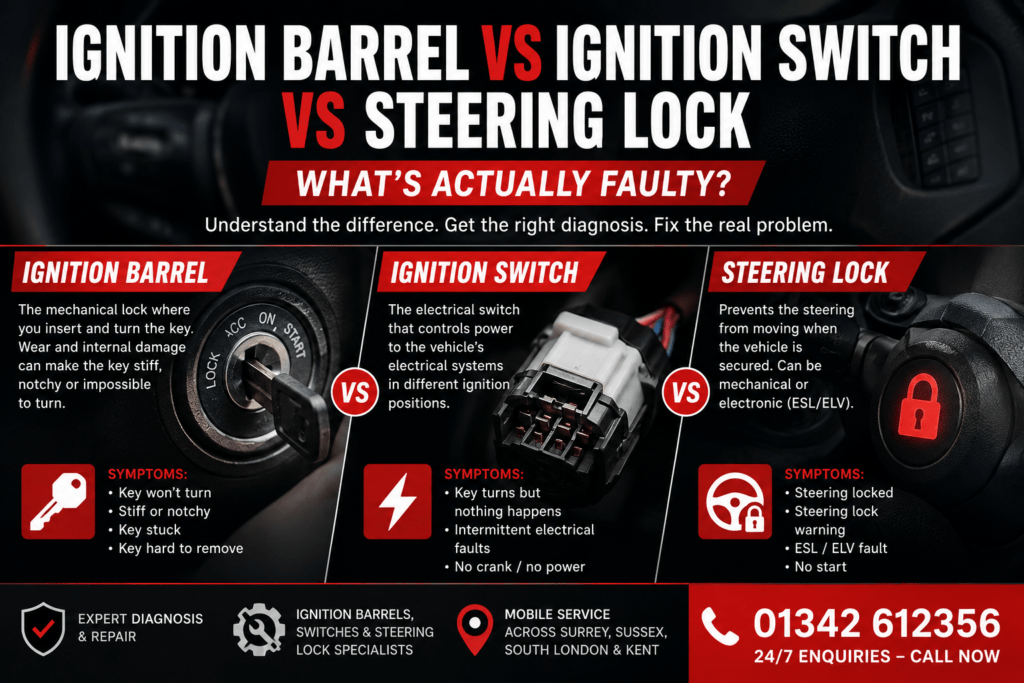
MR IGNITION • IGNITION & STEERING LOCK SPECIALIST Ignition Barrel vs Ignition Switch vs Steering Lock – What’s Actually Faulty? Your key will not turn. The ignition feels stiff. The steering wheel is locked. The dashboard stays dark. Or the key turns normally but the vehicle still will not start. These symptoms can be caused by very different components. Understanding whether the fault is the ignition barrel, ignition switch, steering lock or an electronic ESL/ELV system is the first step towards the correct repair. When a car develops an ignition problem, one of the most common assumptions is that the ignition barrel has failed. Sometimes that diagnosis is correct. But the ignition barrel is only one part of the system involved in unlocking the steering, recognising the key and allowing the vehicle to start. Depending on the vehicle, the actual fault could be the mechanical ignition barrel, the ignition switch, the mechanical steering lock, an electronic steering lock commonly referred to as an ESL or ELV, or another part of the vehicle’s starting and authorisation system. The symptoms can overlap. A driver may describe all of these problems simply as: “My ignition isn’t working.” Mr Ignition specialises in diagnosing and resolving suitable ignition barrel, ignition switch and steering lock faults across a wide range of cars and vans. Understanding exactly which component has failed can help avoid replacing parts unnecessarily. Quick Answer: Ignition Barrel, Ignition Switch or Steering Lock? If the key physically will not turn, feels stiff or needs to be wiggled, a mechanical ignition barrel or steering lock problem may be responsible. If the key turns normally but expected electrical functions do not operate, the ignition switch or another electrical component may need investigation. If the steering remains locked, an electronic steering lock displays a fault message, or the vehicle does not authorise the start sequence, the problem may involve the steering lock, ESL, ELV or another electronic authorisation component. These are general symptom patterns rather than a definitive diagnosis. Vehicle systems differ considerably between makes, models and generations, so the actual fault should be established before parts are replaced. Not Sure What’s Wrong With Your Ignition? Contact Mr Ignition with your vehicle registration, make, model, year, exact postcode and a clear description of what happens when you insert or turn the key, or attempt to start the vehicle. Tell us whether the key turns, whether the steering is locked, whether the dashboard illuminates and whether any warning or steering lock message appears. Mobile assistance may be available for suitable ignition barrel, ignition switch and steering lock faults subject to current coverage, location and availability. We are available 24/7 for enquiries. Call Now WhatsApp Us The Three Components Drivers Commonly Confuse The terms ignition barrel, ignition switch and steering lock are sometimes used interchangeably, but they describe different components. 1. Ignition Barrel The ignition barrel is the mechanical lock cylinder into which a traditional ignition key is inserted on vehicles that use this type of system. Internal mechanical components interact with the key profile and allow the barrel to rotate when the correct key is used. 2. Ignition Switch The ignition switch is the component responsible for electrical switching functions associated with different ignition positions on applicable vehicles. It may be mechanically operated by the ignition barrel or form part of a different ignition system depending on the vehicle design. 3. Steering Lock The steering lock prevents normal steering movement when the vehicle is secured. Depending on the vehicle, this may be a traditional mechanical mechanism or an electronic steering lock known as an ESL or ELV. Ignition Barrel vs Ignition Switch vs Steering Lock: Symptoms at a Glance Symptom Possible Area to Investigate Key is physically difficult to turn Ignition barrel, key wear or mechanical steering lock mechanism Key needs to be wiggled before it turns Worn key, ignition barrel or related mechanical lock components Key will not turn at all Ignition barrel, damaged key, steering lock tension or mechanical lock fault Key turns but expected electrical functions do not operate Ignition switch, electrical supply or another related electrical fault Steering remains locked Mechanical steering lock or electronic ESL/ELV, depending on vehicle Steering lock warning appears Electronic steering lock system, related control module, wiring or authorisation system Ignition works intermittently Could involve mechanical barrel wear, ignition switch, electronic steering lock or another intermittent fault No ignition response Ignition switch, EIS/EZS or electronic authorisation system, power supply, ESL/ELV or another vehicle fault Key is stuck in the ignition Ignition barrel, key wear, mechanical lock mechanism or another interlock-related issue depending on vehicle This table is intended as a general guide only. Different vehicles use different ignition and steering lock architectures, and similar symptoms can have different causes. What Is an Ignition Barrel? On a traditional key-operated ignition system, the ignition barrel is the mechanical lock cylinder into which you insert the vehicle key. The key profile interacts with internal lock components. When the correct key is inserted and the mechanism is operating correctly, the barrel can rotate through its intended positions. Over time, both the key and internal components can wear. This can cause the ignition to become stiff, notchy or increasingly difficult to operate. Common Symptoms of a Faulty Ignition Barrel Key is difficult to insert Key is difficult to remove Key feels stiff when turning Key needs to be wiggled Ignition works intermittently Key will not turn Key becomes stuck Key turns less smoothly than before Multiple suitable keys experience similar problems A developing ignition barrel problem may start as an occasional inconvenience and gradually become more frequent until the key no longer turns. A Stiff Ignition Key Should Not Be Forced If your key is becoming increasingly difficult to turn, avoid applying excessive force. Forcing a worn or binding ignition mechanism can potentially damage the key or worsen an existing mechanical fault. In some cases, the key may eventually bend or snap inside the ignition. If the ignition is showing repeated signs of stiffness,
Broken Key Extraction – Car Key Snapped or Stuck in the Ignition? | Mr Ignition
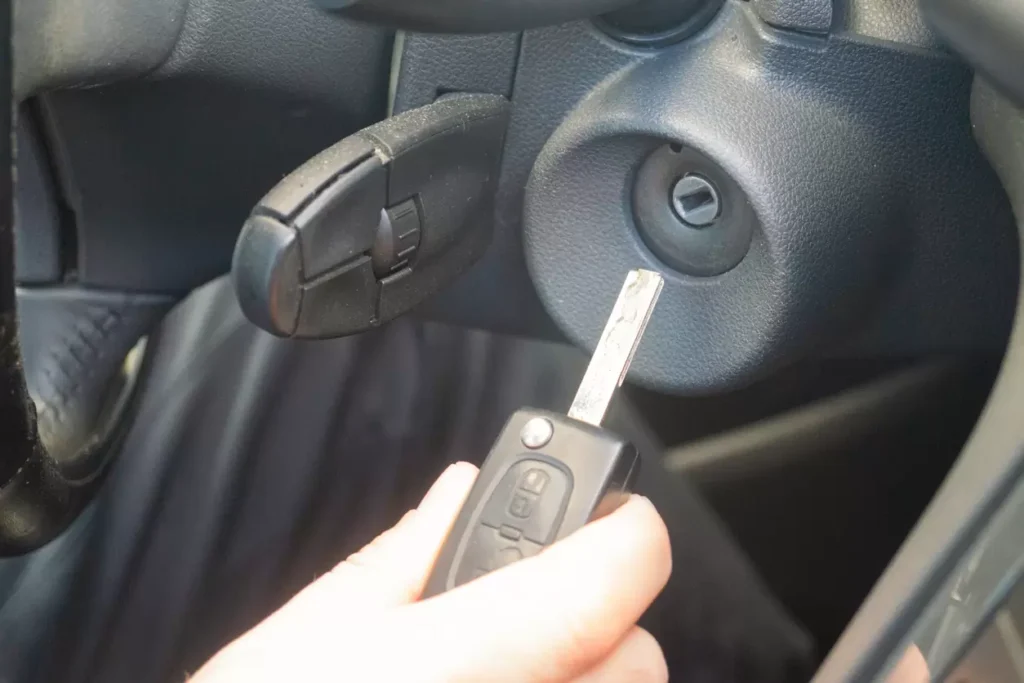
MR IGNITION • SPECIALIST BROKEN KEY EXTRACTION Broken Key Extraction – Car Key Snapped or Stuck in the Ignition? Specialist broken car and van key extraction for keys that have snapped, broken or become stuck inside an ignition barrel. Mr Ignition can assess the key and ignition mechanism, carefully extract suitable broken keys and identify whether an underlying ignition barrel fault also requires attention. A broken car key stuck in the ignition can leave you unable to start your vehicle, switch off normally or remove the remaining section of the key from the ignition barrel. Sometimes a key breaks simply because the metal blade has become weakened or damaged over time. In other cases, the broken key is only part of the problem. A worn, stiff or internally damaged ignition barrel can place additional resistance on the key until the blade eventually bends or snaps. Mr Ignition provides specialist broken key extraction for suitable cars and vans, with mobile assistance available in covered areas subject to availability and the circumstances of the job. The aim is not simply to remove the visible piece of broken key. Where appropriate, the ignition barrel should also be checked to establish why the key broke and whether further repair is required before another key is inserted. Quick Answer: What Should I Do If My Car Key Snaps in the Ignition? If your car key has snapped inside the ignition, do not push the broken section further into the barrel and avoid repeatedly attempting to turn the remaining piece. Do not force another key into the ignition while part of the original key remains inside. Specialist extraction may allow the broken key section to be removed while minimising the risk of unnecessary damage to the ignition barrel. The barrel can then be assessed to determine whether it operates correctly or whether an underlying mechanical fault contributed to the key breaking. Broken Car Key Stuck in Your Ignition? Contact Mr Ignition with your vehicle registration, make and model, exact postcode and a brief description of what happened when the key broke. If possible, keep all pieces of the broken key. A clear photograph of the remaining key and ignition area may also help when discussing the problem. Mobile broken key extraction may be available for suitable vehicles and safe working locations, subject to current coverage and availability. We are available 24/7 for enquiries. Call Now WhatsApp Us What Is Broken Key Extraction? Broken key extraction is the process of removing a broken section of key from a lock or ignition barrel without causing unnecessary additional damage to the mechanism. In automotive applications, the situation can be more complicated than simply pulling out a visible piece of metal. The key may have broken flush with the face of the ignition barrel or may be positioned deeper within the lock mechanism. The ignition may also be in a partially turned position, and internal lock components may be placing pressure on the broken blade. For these reasons, a professional extraction should consider both the broken key and the condition of the ignition barrel itself. Why Do Car Keys Break in Ignition Barrels? Car keys are designed for repeated use, but both the key and ignition barrel experience mechanical wear over time. A key that has operated the same vehicle for many years may gradually become worn, weakened or damaged. Common factors that can contribute to a car key breaking include: Worn Key Blade Repeated use can gradually wear the profile of a mechanical key. A heavily worn blade may become weaker and may no longer interact smoothly with the ignition barrel. Stiff Ignition Barrel If the ignition requires increasing force to turn, the extra pressure placed on the key can contribute to bending or breakage. Internal Barrel Wear Worn or damaged internal lock components can cause the key to bind instead of moving smoothly through the normal ignition positions. Bent or Damaged Key A key that has previously been bent or physically damaged may be structurally weakened and more likely to snap during use. Excessive Force Trying to force a key through a stiff or jammed ignition mechanism can place significant stress on the blade. General Wear and Age Older keys and ignition components can both experience wear. Sometimes the failure is caused by a combination of a worn key and a worn ignition barrel. Avoid DIY Broken Key Extraction That Could Damage the Ignition A broken key can be frustrating, particularly when part of the blade is visible and appears easy to grab. However, unsuccessful extraction attempts can sometimes push the key fragment further into the barrel or damage internal lock components. Avoid forcing screwdrivers, drill bits or other unsuitable objects into the ignition barrel. You should also avoid applying excessive force to the broken key fragment. If the ignition barrel was already stiff before the key snapped, extracting the key without addressing the underlying fault may simply result in the replacement or spare key experiencing the same problem. Signs the Ignition Barrel May Have Caused the Key to Break If your key broke unexpectedly but the ignition had previously operated smoothly, the key itself may have been worn or damaged. However, there are several warning signs that can indicate an underlying ignition barrel or steering lock problem. The key had become increasingly difficult to turn You regularly had to wiggle the key before the ignition would turn The ignition felt stiff or notchy The key occasionally became stuck The ignition worked intermittently You had to move the steering wheel before the key would turn A spare key experienced similar difficulty The key became difficult to insert or remove The ignition had previously jammed completely If several keys experience the same symptoms, this can be an indication that the problem is not limited to one worn key. Can a Broken Key Be Removed Without Replacing the Ignition Barrel? In many cases, yes. A broken key does not automatically mean that the complete ignition barrel needs to be
Citroen Relay & Peugeot Boxer Ignition Barrel Failure – Causes and Symptoms
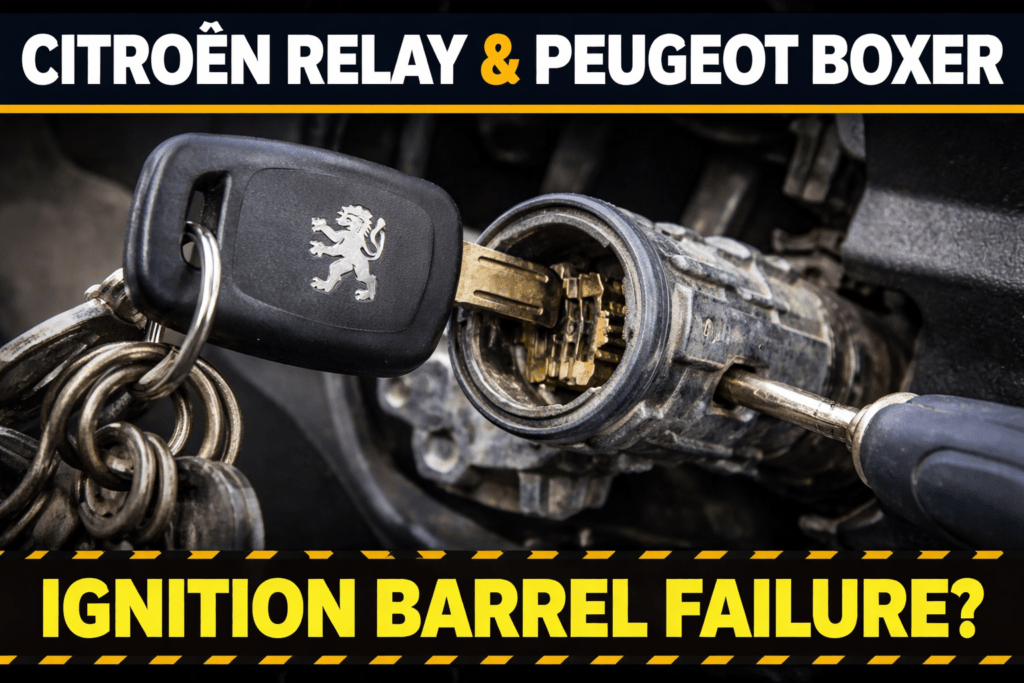
MR IGNITION • VAN IGNITION ADVICE Citroën Relay & Peugeot Boxer Ignition Barrel Failure – Causes and Symptoms A practical guide to common Citroën Relay and Peugeot Boxer ignition barrel problems, including stiff or jammed keys, worn ignition components, ignition switch faults, repair options and the warning signs to look out for. Ignition barrel problems are a common issue on several large vans, including the Citroën Relay and Peugeot Boxer. When the ignition system begins to fail, drivers may notice the key becoming difficult to turn or the vehicle refusing to start. Because these vans are widely used by tradespeople, couriers and delivery drivers, ignition faults can become particularly disruptive. Problems often appear after years of regular use and higher mileage, although the exact cause of an ignition fault should always be identified before deciding which component needs attention. Understanding the warning signs of ignition barrel failure can help you recognise a developing problem before the ignition becomes completely jammed and the van is immobilised. Citroën Relay or Peugeot Boxer Key Won’t Turn? Quick Answer If the key has become stiff, intermittently refuses to turn or is completely jammed in the ignition, wear inside the mechanical ignition barrel may be responsible. However, a worn vehicle key or another ignition-related fault can sometimes produce similar symptoms. If the key turns normally but the vehicle does not start, the fault may involve the electrical ignition switch or another part of the starting system rather than the mechanical barrel itself. Avoid repeatedly forcing a key that will not turn. Excessive force can potentially damage the key or leave part of it broken inside the ignition. Need Help With a Citroën Relay or Peugeot Boxer Ignition? Mr Ignition provides specialist mobile ignition services for suitable vehicles, including ignition barrel repair, rebuilding and replacement. Same-day service may be available subject to current availability, exact location, vehicle and work required. We are available 24/7 for ignition enquiries. Call Now WhatsApp Us What Happens When the Ignition Barrel Fails? The ignition barrel is the mechanical component that works with the shape and cuts of the vehicle key. Inside the barrel are small mechanical components that must align correctly when the appropriate key is inserted. When the correct key is inserted and the mechanical components align correctly, the ignition barrel can turn, allowing the vehicle’s ignition and starting sequence to operate. After years of regular use, internal components within the ignition barrel can wear. When this happens, the key may become increasingly difficult to turn, the barrel may operate intermittently or the ignition may eventually become completely jammed. In some cases, the mechanical ignition barrel may not be the only possible cause. The electrical ignition switch associated with the ignition assembly can also develop a fault. If the key turns normally but the expected electrical or starting response does not occur, the ignition switch or another part of the vehicle’s starting system may need to be investigated. Common Symptoms of Citroën Relay and Peugeot Boxer Ignition Problems Several warning signs may appear before an ignition barrel fails completely. Recognising a developing problem early can help reduce the risk of the van becoming unexpectedly immobilised. Key Will Not Turn in the Ignition One of the most common symptoms is the key refusing to turn inside the ignition barrel. The key may initially feel stiff or catch intermittently before the mechanism becomes completely jammed. Key Turns but the Engine Does Not Start If the key turns normally but the vehicle does not start, the problem may involve the electrical ignition switch or another component in the vehicle’s starting system rather than mechanical seizure of the barrel. Key Becomes Stuck in the Ignition A key may become trapped inside a worn or faulty ignition barrel. Avoid repeatedly twisting or pulling a trapped key with excessive force, as this could potentially cause additional damage. Ignition Feels Loose or Worn Drivers may notice that the ignition mechanism feels different from normal, increasingly worn or unreliable before a more serious fault develops. Ignition Becomes Progressively Stiffer A key that previously turned normally may gradually become more difficult to operate. Progressive stiffness should not be ignored, particularly if the problem is becoming more frequent. Vehicle Cannot Be Started If the ignition barrel becomes completely seized and the key can no longer be turned through its normal positions, the vehicle may be left immobilised. Important: If your Citroën Relay or Peugeot Boxer ignition is becoming stiff, avoid using excessive force to turn the key. Forcing a worn or weakened key can potentially cause it to snap inside the ignition, creating an additional problem requiring broken key extraction . Why Do Citroën Relay and Peugeot Boxer Ignition Barrels Fail? There are several possible causes of ignition problems on these vans. The symptoms can overlap, which is why correctly identifying the faulty component is important. Worn Ignition Barrel Components One common cause is mechanical wear inside the ignition barrel itself. After repeated daily use, internal components can wear and may no longer interact smoothly with the key. The result may initially be intermittent stiffness before developing into a key that becomes increasingly difficult or impossible to turn. Worn Vehicle Keys Vehicle keys also wear over time, particularly on high-mileage commercial vans that may be started many times each working day. A significantly worn key blade may not interact with the ignition barrel in the same way it did when new. Where another suitable working key is available, information about whether the same fault occurs with both keys can be useful when investigating the problem. Ignition Switch Failure The mechanical ignition barrel and electrical ignition switch perform different functions. If the mechanical barrel turns normally but the expected electrical response does not occur, the electrical ignition switch may be one possible cause. Where this component is confirmed as faulty, an ignition switch replacement service may be appropriate for a suitable vehicle. It is important not to assume that every no-start condition is caused by the ignition barrel or
Volkswagen Golf Ignition Barrel Failure – Causes and Symptoms

MR IGNITION • VOLKSWAGEN IGNITION ADVICE Volkswagen Golf Ignition Barrel Failure – Causes and Symptoms A practical guide to Volkswagen Golf ignition barrel problems, including common symptoms on Golf MK5, MK6 and MK7 models, keys that will not turn, jammed ignition barrels, steering lock problems and ignition switch faults. Volkswagen Golf ignition barrel problems can leave the vehicle difficult or impossible to start. Drivers may notice the ignition key becoming increasingly difficult to turn, a clicking noise when attempting to operate the ignition, or the ignition barrel becoming completely jammed. Ignition-related problems can affect Volkswagen Golf models including the MK5, MK6 and MK7, although the exact ignition and steering lock systems fitted can vary between generations, specifications and model years. The symptoms of an ignition barrel fault can sometimes overlap with problems involving a worn vehicle key, the steering lock mechanism or the electrical ignition switch. Identifying the component responsible for the fault is therefore important before deciding on the appropriate repair. Volkswagen Golf Key Won’t Turn? Quick Answer If your Volkswagen Golf key has become stiff, intermittently refuses to turn or is completely jammed in the ignition, mechanical wear inside the ignition barrel or an associated mechanical locking component may be responsible. A worn key can sometimes contribute to similar symptoms. If the key turns normally but the expected electrical response does not occur, the fault may instead involve the electrical ignition switch or another part of the vehicle’s starting system. Avoid repeatedly forcing a Golf ignition key that will not turn. Excessive force can potentially damage or break the key and may make an existing ignition problem worse. Need Help With a Volkswagen Golf Ignition Problem? Mr Ignition provides specialist mobile ignition services for suitable Volkswagen vehicles, including ignition barrel repair, rebuilding and replacement and related steering lock and ignition switch services. Same-day service may be available subject to current availability, exact location, vehicle and work required. We are available 24/7 for ignition enquiries. Call Now WhatsApp Us What Happens When a Volkswagen Golf Ignition Barrel Fails? The mechanical ignition barrel is designed to operate with the vehicle key. When the correct key is inserted, the internal mechanical components must align correctly to allow the ignition mechanism to turn. Over time, repeated use can cause wear within the ignition barrel and related mechanical components. The key may initially feel slightly stiff before becoming increasingly difficult to turn. In more advanced cases, the ignition mechanism may become completely jammed, leaving the driver unable to turn the key through its normal positions and potentially unable to start the vehicle. Not every Volkswagen Golf ignition problem is caused by the barrel itself. Depending on the vehicle and symptoms, the fault may involve another component such as the steering lock mechanism or electrical ignition switch. Common Symptoms of Volkswagen Golf Ignition Barrel Problems Volkswagen Golf ignition problems can produce several different symptoms. Some may develop gradually, while others may appear more suddenly. Key Will Not Turn The key may insert normally but refuse to rotate inside the ignition. This can be associated with mechanical wear or seizure within the ignition barrel or a related locking component. Ignition Barrel Completely Jammed A developing fault can eventually leave the ignition mechanism completely jammed, preventing normal operation of the vehicle. Single Clicking Noise A driver may report hearing a click when attempting to operate or start the vehicle. A clicking symptom alone does not prove that the ignition barrel is faulty, so the exact behaviour of the key and vehicle should also be considered. Vehicle Will Not Start If the ignition mechanism cannot turn through its normal positions, the vehicle may be unable to complete the normal starting process. Other electrical or starting faults can also cause a no-start condition. Key Becomes Increasingly Stiff A key that previously operated normally may gradually become harder to turn. Progressive stiffness can be an early warning that a mechanical ignition problem is developing. Key Stuck in the Ignition A mechanical fault may sometimes leave the key trapped inside the ignition. Avoid repeatedly forcing or pulling a key that cannot be removed through normal operation. Important: If your Volkswagen Golf key is becoming difficult to turn, avoid repeatedly applying excessive force. A worn or weakened key could potentially break inside the ignition, creating an additional problem that may require broken key extraction . What Causes Volkswagen Golf Ignition Barrel Failure? Several different faults can produce ignition-related symptoms on a Volkswagen Golf. Correctly identifying the cause helps determine whether the appropriate solution is ignition barrel repair, rebuilding, replacement or work to another component. Worn Ignition Barrel Components Mechanical components inside an ignition barrel can wear after years of regular use. As wear develops, the interaction between the vehicle key and the internal mechanism may become less reliable. The first sign may be occasional stiffness or the need to move the key slightly before it turns. If the wear progresses, the ignition may eventually become difficult or impossible to operate normally. Worn Volkswagen Golf Keys Vehicle keys can also wear with regular use. A heavily worn key blade may not interact with the ignition mechanism as effectively as it did when new. Where another suitable working key is available, knowing whether the same symptom occurs with both keys can provide useful information when investigating the fault. A worn key does not automatically mean the key itself is the only problem. Both the key and ignition mechanism may need to be considered. Steering Lock Problems Depending on the Volkswagen Golf generation and the specific system fitted to the vehicle, an ignition-related problem may involve the mechanical steering lock mechanism or another relevant steering-lock component. A steering lock that does not release correctly can prevent normal operation and may produce symptoms that appear similar to an ignition barrel fault. Where a steering lock fault is suspected, specialist steering lock repair services may be relevant depending on the vehicle and system involved. The exact ignition and steering lock arrangement varies across Volkswagen Golf
24/7 Auto Locksmith Services – Fast, Reliable Emergency Car Key Assistance

MR IGNITION • AUTO LOCKSMITH ADVICE 24/7 Auto Locksmith Services – Fast & Reliable Emergency Car Key Assistance Locked out of your vehicle, lost your car keys or need help with a car key problem? Our sister site, 247 Auto Locksmith, provides specialist mobile auto locksmith and vehicle key services for drivers who need professional assistance. Car key and vehicle lock problems can happen at the most inconvenient times. You may discover that your keys have been lost, find yourself locked out of your vehicle or experience a problem with a damaged or faulty car key. When this happens, access to a specialist auto locksmith can help you deal with the problem without the inconvenience of trying to resolve a complex vehicle key or locking issue yourself. For customers who require broader auto locksmith and car key services, Mr Ignition recommends our sister business, 247 Auto Locksmith. Visit 247 Auto Locksmith to find out more about available vehicle locksmith and car key services. Need an Auto Locksmith? Here’s What to Do If you are locked out of your vehicle, have lost your car keys or require assistance with a vehicle key problem, contact 247 Auto Locksmith and provide your vehicle details, location and a clear description of the issue. The information you provide can help establish the type of assistance required and current mobile service availability. For immediate enquiries, call or WhatsApp 07921 365247. Need Car Key or Auto Locksmith Assistance? Contact 247 Auto Locksmith for specialist mobile vehicle locksmith and car key assistance. Call or WhatsApp 07921 365247, or visit the 247 Auto Locksmith website to find out more. Call 247 Auto Locksmith WhatsApp 247 Auto Locksmith Visit 247 Auto Locksmith 24/7 Auto Locksmith Services for Vehicle Key Problems Modern vehicle keys and locking systems can be complex, and the appropriate solution depends on the vehicle and the exact problem involved. A specialist auto locksmith service may be able to assist with a range of vehicle key and lock-related situations. Lost Car Keys Losing the only available key to a vehicle can leave you unable to access or use the car. A specialist auto locksmith can assess the vehicle and determine the appropriate key solution. Replacement Car Keys Replacement vehicle key services may be available where a key has been lost, damaged or where an additional key is required for a suitable vehicle. Vehicle Lockouts If the vehicle is locked and the key is unavailable or inaccessible, professional auto locksmith assistance may help restore access using an appropriate method for the vehicle. Car Key Programming Many modern vehicle keys incorporate electronic components that must communicate correctly with the vehicle. Suitable replacement keys may require specialist programming depending on the make, model and system. Damaged or Faulty Car Keys Vehicle keys can become worn or damaged through regular use. The appropriate solution depends on the type of key, its condition and the vehicle involved. Mobile Auto Locksmith Assistance For suitable jobs and locations, a mobile auto locksmith service can provide assistance at the vehicle’s location, helping customers who cannot conveniently bring the vehicle to a workshop. What Should You Do if You Have Lost Your Car Keys? If you have lost your vehicle keys, first check whether you have access to a suitable spare key. If no working key is available, an auto locksmith may need information about the vehicle before determining the appropriate solution. When contacting 247 Auto Locksmith, it can be useful to have the following information available: Vehicle make and model Vehicle registration Approximate model year Your exact location or postcode Whether all vehicle keys have been lost Whether you have a spare key available Whether the vehicle is currently locked A description of any damaged or faulty key Providing accurate information can help establish the type of key and service that may be required. Locked Out of Your Car? A vehicle lockout can happen for several reasons. The key may have been lost, left somewhere inaccessible or there may be another problem preventing normal access to the vehicle. Rather than attempting to force entry and potentially causing damage, contact a specialist auto locksmith to discuss the vehicle and circumstances. The appropriate method of gaining access depends on the vehicle and locking system involved. Need auto locksmith assistance? For car key and vehicle locksmith enquiries, contact 247 Auto Locksmith on 07921 365247 or visit www.247autolocksmith.co.uk . Replacement Car Key Services A replacement car key may be required if the original key has been lost, damaged or is no longer operating correctly. The process involved can vary considerably between vehicles. Older vehicle keys may differ significantly from modern keys containing transponder chips, remote functions or other electronic components. The vehicle make, model, year and key system should therefore be identified before determining what type of replacement key service is appropriate. Car Key Programming Many modern vehicles use keys containing electronic technology that communicates with the vehicle’s security system. Where required, a suitable replacement key may need to be correctly programmed to work with the vehicle. The exact process depends on the manufacturer, model, year and security system fitted to the vehicle. If you require a replacement or programmed vehicle key, contact 247 Auto Locksmith with your vehicle details to discuss the service you need. Mobile Auto Locksmith Services Vehicle key problems frequently happen when the vehicle cannot easily be moved. Lost keys or a lockout may leave the driver unable to access or operate the vehicle normally. For suitable jobs and safe working locations, mobile auto locksmith assistance may be available at the vehicle’s location. When making an enquiry, provide the exact postcode and vehicle registration together with a description of the problem so that current availability can be checked. How to Request Auto Locksmith Assistance 1 Contact 247 Auto Locksmith Call or WhatsApp 07921 365247 with a brief description of your vehicle key or lock problem. 2 Provide Your Vehicle Details Send the vehicle registration, make and model, exact postcode and any other relevant information about
Jaguar XF Steering Lock Emulator Supply & Fitting Service
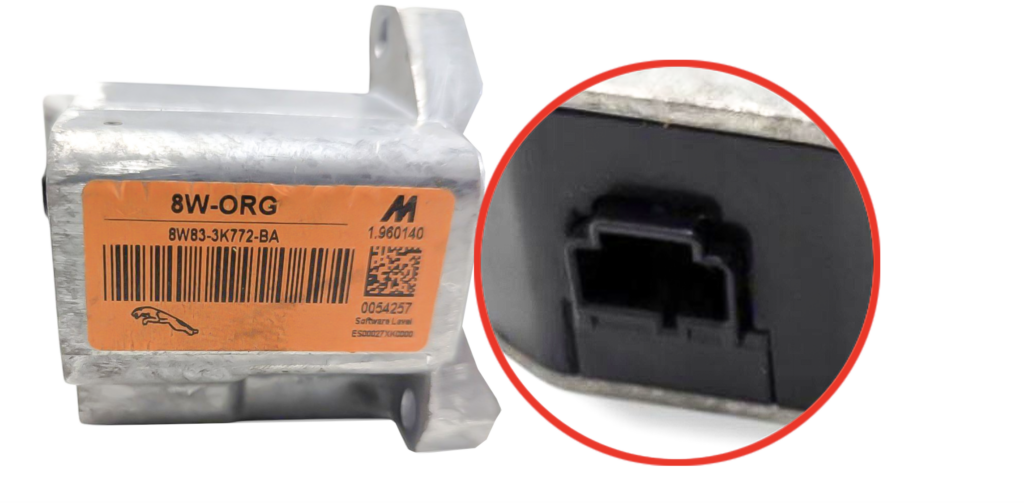
MR IGNITION • JAGUAR STEERING LOCK SPECIALIST Jaguar XF Steering Lock Emulator Supply & Fitting Service Specialist assistance for suitable Jaguar electronic steering lock faults, including diagnosis, steering lock emulator solutions, professional installation and testing. A failed electronic steering lock can leave a Jaguar unable to start, even when the vehicle recognises the key. Drivers may experience a steering lock warning, intermittent starting problems or find that the steering wheel does not unlock as expected. Electronic steering lock faults can be particularly frustrating because the vehicle may appear to have power and recognise the key while still preventing the normal starting sequence. Mr Ignition provides specialist steering lock services for suitable Jaguar vehicles, including diagnosis and, where appropriate for the specific vehicle and fault, steering lock emulator supply and professional fitting. Jaguar XF Showing “Steering Column Locked”? Quick Answer If your Jaguar XF displays a steering column locked warning, the steering wheel fails to unlock or the vehicle recognises the key but will not complete the normal starting sequence, an electronic steering lock fault may be one possible cause. Other electrical, battery, key-recognition and starting system faults can sometimes produce overlapping symptoms, so the vehicle should be correctly assessed before assuming that an emulator or steering lock replacement is required. Where the electronic steering lock is confirmed as the relevant failed component, a specialist repair or emulator solution may be appropriate depending on the vehicle and system involved. Jaguar Immobilised by a Steering Lock Fault? Contact Mr Ignition if your Jaguar XF or another suitable Jaguar vehicle is experiencing an electronic steering lock problem. Same-day service may be available subject to current availability, exact location, vehicle and work required. We are available 24/7 for ignition and steering lock enquiries. Call Now WhatsApp Us What Is the Jaguar Electronic Steering Lock? The electronic steering lock forms part of the vehicle’s security and starting system. Its purpose is to control the locking and unlocking of the steering column in coordination with other vehicle systems. When operating correctly, the system receives the appropriate command and allows the steering column to unlock as part of the normal vehicle access and starting process. If the electronic steering lock develops a fault, the vehicle may be unable to confirm that the steering column has unlocked correctly. Depending on the system and fault, this can interfere with the normal starting sequence. A steering lock fault does not necessarily mean that the key itself is defective. In some cases, the key may be recognised normally while the steering lock system fails to operate as expected. Common Symptoms of Jaguar Steering Lock Failure The exact symptoms can vary depending on the Jaguar model, system fitted and nature of the fault. “Steering Column Locked” Warning A warning relating to the steering column or steering lock may appear when the vehicle cannot confirm normal operation of the locking system. Jaguar Will Not Start A steering lock fault may interfere with the vehicle’s normal starting authorisation sequence, potentially leaving the vehicle unable to start. Key Recognised but Vehicle Will Not Crank In some cases, the vehicle may appear to recognise the key while another part of the starting authorisation process does not complete normally. Steering Wheel Fails to Unlock The steering column may remain locked when it should normally release, indicating a possible fault involving the steering lock system. Clicking From the Steering Column Clicking or repeated attempted operation from the steering column area may be reported with some steering lock faults. A clicking sound alone does not confirm the exact failed component. Intermittent Starting Problems Some faults may initially occur intermittently. The vehicle may start normally on one occasion and then fail to complete the expected starting sequence at another time. Important: A Jaguar that does not start is not automatically suffering from steering lock failure. Battery condition, key recognition, vehicle electronics and other starting-system components can produce similar symptoms. Correct diagnosis is important before fitting or programming replacement components. Why Do Jaguar Electronic Steering Locks Fail? Electronic steering locks combine mechanical and electronic components. Like other electromechanical vehicle systems, faults can develop over time. Depending on the specific steering lock design, possible failure points may involve the internal motor, mechanisms, position detection or electronic components. When the system can no longer operate or report its status correctly, the vehicle may prevent normal starting because the expected steering lock sequence has not been completed. The exact cause should be established for the individual vehicle rather than assuming that every steering lock warning requires the same solution. Jaguar Models That May Experience Steering Lock Problems Steering lock and starting-system faults may be encountered on various Jaguar vehicles depending on the model, year and electronic system fitted. Relevant models discussed in connection with Jaguar steering lock and related starting problems can include: Jaguar XF Jaguar XFR Jaguar XK Jaguar XKR Jaguar XJ Jaguar XJ8 Jaguar XK8 This does not mean that every version of these vehicles uses the same steering lock system or requires the same repair. Vehicle compatibility should be confirmed using the specific vehicle details and the system fitted. Jaguar Steering Lock Part Numbers Part numbers associated with Jaguar steering column and steering lock systems may include references such as 8W83-3K772-BA and 2W93-3C529-AN. A part-number reference alone should not be used to assume compatibility with every Jaguar model or to diagnose a steering lock fault. The vehicle identification details, model, year, fitted system and actual fault should be checked before determining whether a particular repair, replacement or emulator solution is appropriate. What Is a Jaguar Steering Lock Emulator? A steering lock emulator is an electronic solution designed for certain vehicle systems where a failed electronic steering lock is preventing the vehicle from completing its normal authorisation or starting process. For a suitable application, an emulator is configured to communicate appropriately with the relevant vehicle system in place of the failed electronic steering lock function. An emulator is not a universal solution for every Jaguar that fails to start. The underlying